Why All Clubs Need To Create A Culture of Belonging
By defining diversity, equity and inclusion (DEI) within your club, and having a clearly articulated DEI policy and plan, you show that you genuinely want all members to feel that they belong. A shared understanding of DEI is how you make your stated values carry real weight and create a sense of community.
Where diversity once referred to your club’s make-up of racial, gender, and sexuality demographics, in the modern workplace, the meaning has taken on new facets. Culture, knowledge, and experience now all carry equal weight too. Real diversity is recognizing that people aren’t a set of attributes on a spreadsheet, and that every voice is unique.
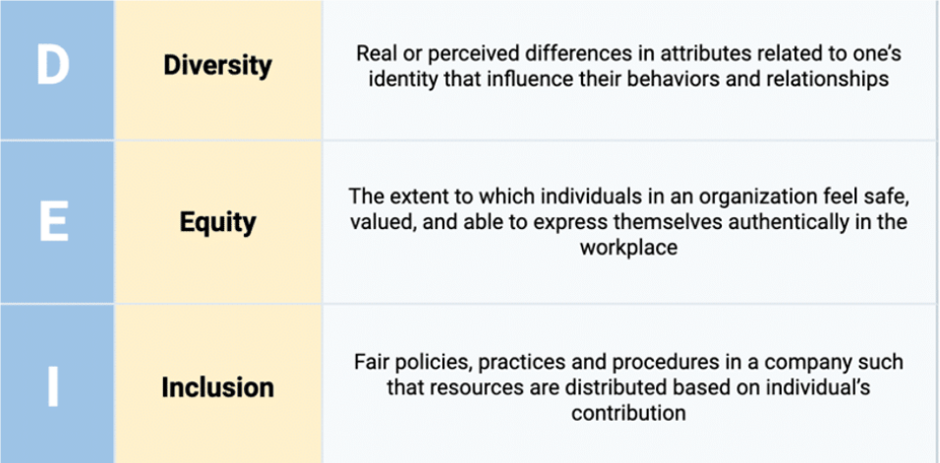
Diversity
- Refers to the presence of differences in a club —such as race, ethnicity, gender, age, sexual orientation, disability, socioeconomic status, religion, and more.
- It’s about representation: ensuring that varied perspectives and identities are included.
Equity
- Focuses on fairness and justice in access, opportunity, and outcomes.
- Unlike equality (which treats everyone the same), equity recognizes that people start from different places and may need different support to succeed.
Inclusion
- Ensures that diverse individuals feel welcomed, respected, and able to participate fully.
- It’s about belonging—creating a culture where everyone’s voice matters and contributions are valued.
Why Do Rotary Clubs Need DEI?
For Rotary clubs and service organizations, embracing DEI means building communities that reflect the world’s richness and uphold the dignity of every person.
Rotary clubs should embrace DEI because it strengthens our mission to create lasting change by ensuring every person feels valued, heard, and empowered to contribute. DEI fosters belonging, expands impact, and reflects Rotary’s global values.
Alignment with Rotary’s Vision and Values | Rotary’s vision is to “unite people and take action to create lasting change.” DEI ensures that this unity includes people of all backgrounds, identities, and experiences. The Rotary Board reaffirmed its DEI commitment in 2021, emphasizing that “cultivating a diverse, equitable, and inclusive culture is essential to realizing our vision.” | |||
Strengthening Club Culture and Belonging | Embracing DEI helps clubs build a culture of belonging and engagement, where every member feels respected and valued. It encourages open dialogue, reduces bias, and promotes inclusive leadership, making clubs more dynamic and resilient. | |||
Expanding Reach and Relevance | DEI enables Rotary clubs to better reflect and serve their communities, especially marginalized or underrepresented groups. Inclusive clubs attract diverse talent and perspectives, leading to more innovative service projects and stronger partnerships. | |||
Personal Growth and Learning | DEI fosters cultural humility and empathy, encouraging members to challenge assumptions and grow as global citizens. It creates space for intergenerational, intercultural, and interdisciplinary collaboration, enriching the Rotary experience. | |||
Practical Impact on Service and Leadership | Clubs that prioritize DEI are more likely to design equitable service initiatives, ensuring resources and opportunities reach those who need them most. It opens pathways for diverse leadership, empowering youth, women, and historically excluded voices to lead and inspire. |
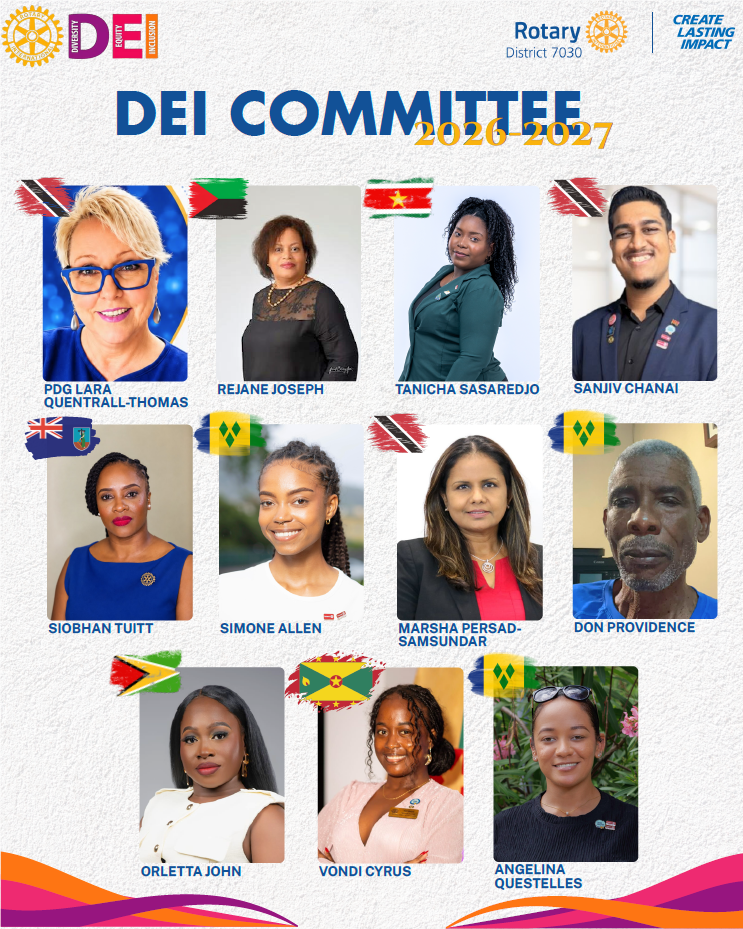
The District 7030 DEI Committee envisions a vibrant, inclusive community where every member feels valued, empowered, and inspired to lead. We strive to cultivate belonging across all identities and experiences, ensuring that diversity, equity, and inclusion are woven into the fabric of Rotary service, leadership, and impact. By championing equity and celebrating diversity, we aim to strengthen Rotary’s mission of creating lasting change in our clubs, our communities, and our world.
Key activities planned for the year include:
- Develop and adopt a DEI vision & values statement for the District
- Conduct a baseline DEI survey across clubs to assess current culture, barriers, and opportunities
- Launch DEI awareness workshops for club leaders and members
- Create a DEI resource toolkit
- Establish a DEI Ambassador program
 About Lara. Lara has been a member of the Rotary Club of Central Port of Spain in Trinidad since 1999. In addition to serving as District 7030 Governor in 2011-2012, she has represented our District at 2 Council on Legislations, and served for 3 years as District Grants Chair and Rotaract Chair. Her current role as Diversity, Equity and Inclusion (DEI) Chair for the District supports her belief that all Rotary clubs should embrace DEI, as it fosters belonging, expands impact, and reflects Rotary’s global values, which is essential to realising our vision as an organisation. For questions or assistance, please email Lara