From conflict to climate change, the challenges facing our communities are daunting.
How do Rotary’s area of focus managers stay inspired and energized?
One way is through books.
For Rotary Foundation Month, we asked them to share what’s on their reading list in hopes that it may inspire and inform your next big project.
Promoting Peace
Making Peace Last: A Toolbox for Sustainable Peacebuilding – Robert Ricigliano
After decades of working on conflict resolution and peacebuilding in the field and in academia, Robert Ricigliano was troubled by the same question: “Why, even when what we did worked, where we had success at the negotiating table, [why] did it not work in the sense that it didn’t lead to sustainable change in the societies that we were working in?” In his book, Ricigliano offers a solution to that problem by providing peacebuilding strategies that are as dynamic and adaptive as the societies they are trying to affect.
Why I recommend it: Ricigliano takes a holistic, hands-on approach to understanding the complexity of building sustainable peace. His perspective is systemic, that is, he looks at the pursuit of peace within the context and interconnectedness of the different dynamics and phenomena within a society or country — and within neighboring societies and countries. That adds up to a practical approach that can yield verifiable results. — REBECCA CRALL
The Moral Imagination: The Art and Soul of Building Peace – John Paul Lederach
Abandoning, in part, the rigorous scientific methods of his earlier books, John Paul Lederach embraces the personal, the anecdotal, and the “messiness of innovation” as he explores how best to “move from destructive violence to constructive social engagement.” What that demands, he insists, is a creative exercise of our moral imagination, which he defines as “the capacity to imagine something rooted in the challenges of the real world yet capable of giving birth to that which does not yet exist.”
Why I recommend it: The Moral Imagination explores the depths of peacebuilding. Writing through four distinct lenses, Lederach doesn’t explain the process to us. Instead, he allows us to build an understanding for ourselves — just as he’s done for himself within the pages of this book. — REBECCA CRALL
Fighting Disease
The Color of Hope: People of Color Mental Health Narratives – Vanessa Hazzard and Iresha Picot
Iresha Picot remembers begging a friend to seek professional therapy for childhood sexual trauma. “I ain’t going to sit in no white person’s face,” the friend responded, reflecting the stigma, distrust, and lack of access that prevent many people of color from seeking help for mental health issues. In this collection of moving essays and poetry, Picot and co-editor Vanessa Hazzard hold space for people of color to share — in their own words — their experience of mental illness.
Why I recommend it: By sharing these stories, this book is helping break the stigma and shame around mental health, particularly in communities of color. It takes us beyond the statistics to engage with the voices of people whose stories so often go unheard. — NYREESE CASTRO-ESPADAS
Providing Clean Water and Sanitation
The Humanure Handbook – Joseph Jenkins
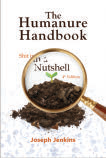
In the mid-1990s, Joe Jenkins had been living off the grid for 10 years, which meant, among other things, using a composting toilet. Wanting to understand how it worked, he began a master’s program and made the toilet his thesis. He turned that manuscript into a book on “humanure,” one that has sold 90,000 copies in the U.S. and been translated into more than 20 languages. With chapter titles such as “Close encounters of the turd kind” and “Bum rap,” this is a book that will both inform and entertain.
Why I recommend it: This book made me recognize that waste is only unappealing because of the negative connotation around the word “waste.” Human waste, just like cow manure or worm castings, is an actual product that can be utilized for good. We can use it for composting and increasing soil fertility. This book opened my mind and took the ickiness out of human waste. — ERICA GWYNN
Supporting Education
We Are Displaced: My Journey and Stories From Refugee Girls Around the World – Malala Yousafzai
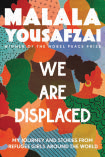
“I was 11 when the Taliban started bombing girls’ schools throughout the Swat Valley.” So begins the second chapter of We Are Displaced, Malala Yousafzai’s book about her experience as an internally displaced person in Pakistan. Many people are familiar with Yousafzai’s story, but here it’s paired with tales of nine other displaced girls. “When you go through that kind of experience,” she writes, “… [e]ither you lose hope completely and you shatter and break into pieces, or you become so resilient that no one can break you anymore.” Yousafzai and the other girls courageously chose resilience.
Why I recommend it: In her latest book, Yousafzai — who, at 17, became the youngest winner of the Nobel Peace Prize — puts a human face on the global refugee crisis. She recounts her own story as well as the poignant tales of adolescent refugee girls from Colombia, the Democratic Republic of Congo, Syria, and elsewhere as they suffer displacement, struggle to continue their education, and hang on to hope. Proceeds from the sale of the book support the Malala Fund’s work to help every girl go to school. — REGINA FULLER-WHITE
Radical Inclusion: Seven Steps to Help You Create a More Just Workplace, Home, and World – David Moinina Sengeh
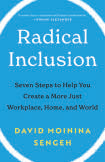
“It is only when we truly believe in and practice radical inclusion … that we can begin to experience justice in the world,” writes David Moinina Sengeh. Toward that end, his book provides guidelines on how to identify exclusion — something, he insists, we will all experience at some time in our lives — and how to take action to remedy it. To show how that’s done, he offers an account of how he and others worked to change the policy that prohibited thousands of pregnant girls from attending school in Sierra Leone.
Why I recommend it: Sengeh, the chief innovation officer and former minister of basic education and senior secondary education in Sierra Leone, is both a theorist and a practitioner. His journey to bring inclusion into schools in his country does exactly what he hoped it would: provide the kind of insight and inspiration that will help readers create “a more just society” in their homes and communities, in their schools and workplaces, and in their countries. — REGINA FULLER-WHITE
Saving Mothers and Children
The Folate Story: A Vitamin Under the Microscope – Victor Hoffbrand
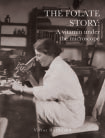
Lucy Wills is the only woman to have discovered one of the 13 essential vitamins. That vitamin, folate, or B9, protects women against anemia in pregnancy and can largely prevent spina bifida and some other birth defects. Yet, like other female doctors and scientists in the early 20th century, Wills faced obstacles and never received public recognition for her achievements. In The Folate Story, Victor Hoffbrand aims to correct that by giving Wills her due and documenting subsequent failures of the medical establishment to act on her achievement, including in countries that have not fortified people’s diets with folic acid.
Why I recommend it: Despite the discovery of folate in the 1930s, thousands of babies today are born with birth defects that could have been easily prevented with this vitamin. This book tells the story of the pioneering female scientist who discovered folate and the shortcomings and scandals of the medical establishment that followed. — NYREESE CASTRO-ESPADAS
Growing Local Economies
Sustainable Livelihoods and Rural Development – Ian Scoones
Poverty today remains a largely rural phenomenon, with rural populations making up three-quarters of the world’s poor people. Ian Scoones draws on decades of research on land, agricultural, and rural development issues to argue for policymakers and development professionals to put people and their livelihoods at the center of efforts to overcome rural inequality and poverty.
Why I recommend it: This book highlights the multi-sectoral approach to poverty alleviation, which is usually overlooked. It advises practitioners and community-based organizations to pay attention to the significance of institutions, participation, processes, power, politics, and policy dimensions, among other aspects. — BONAVENTURE FANDOHAN
The Double X Economy: The Epic Potential of Women’s Empowerment – Linda Scott
Professor Linda Scott had been doing fieldwork among the world’s poor communities for years. But seeing hundreds of homeless adolescent girls fleeing forced marriages during a trip to Ghana forever changed the way she thought about her work in women’s economic empowerment. From the streets of Ghana to American business schools, where women face other systemic barriers, Scott tells the story of women and their shadow economy that she calls “the double X economy.” With hard data, Scott argues that removing obstacles to women’s success is a win for everyone.
Why I recommend it: The Double X Economy is a call to action to join the women’s economic empowerment movement. It highlights how simple interventions in developing countries — providing sanitary pads to encourage school attendance by adolescent girls, for instance — can make a big difference. — BONAVENTURE FANDOHAN
Protecting The Environment
Ever Green: Saving Big Forests to Save the Planet – John W. Reid and Thomas E. Lovejoy
Earth’s five mega-forests serve an essential role in decarbonizing the atmosphere; the North American boreal forest alone holds 1.8 trillion metric tons of carbon in its deep soils and peat layers, 190 years’ worth of global emissions at 2019 levels. Saving these forests is the most immediate and affordable largescale solution to climate change, argue economist John W. Reid and celebrated biologist Thomas E. Lovejoy. The authors offer practical solutions to address the biggest challenges mega-forests face, from vastly expanding protected areas, to supporting Indigenous forest stewards, to planning smarter road networks.
Why I recommend it: This is one of Lovejoy’s last major publications for a general audience. He’s known unofficially as the godfather of biodiversity. He and Reid teamed up for an interesting take on some of the big opportunities in conservation and what’s changed over their long trajectory in the field. — KEITH MADDEN
The Comfort of Crows: A Backyard Year – Margaret Renkl
Author and essayist Margaret Renkl takes readers on a literary journey following the creatures and plants in her backyard over the course of a year, evoking the changing rhythms of humans and their lives as well. The book includes 52 original color artworks by the author’s brother, Billy Renkl.
Why I recommend it: During the couple of years when COVID-19 was really intense, a lot of people started reevaluating their relationships to nature. People were sitting in their backyards more, walking around towns and cities more. Renkl’s reflections on the topic come from her personal experience. Maybe there are some broader lessons we can take from the pandemic, not just about public health but about our humanity and nature. — KEITH MADDEN